
Taste as a Destination
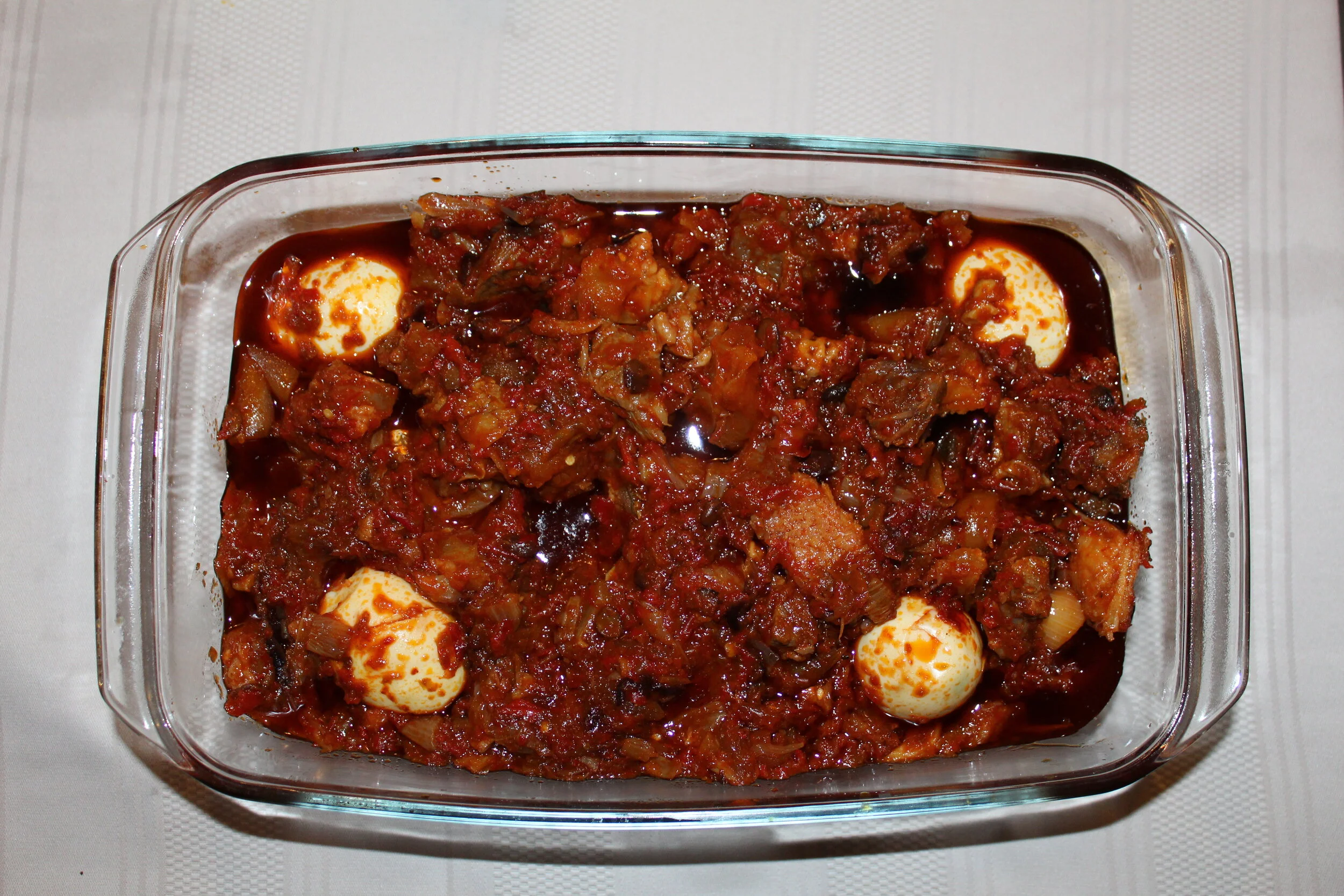
These past few months, I’ve been venturing into the kitchen more and leaving with new skills, new wonders and new questions.
From my failure with the pleasantly sour Injera and my success with the crusty soft baguette; I have let the muses guide me down the path to a perfect meal, or a snack, or a show-off piece for Instagram.
Today was Ayamase. Ayamase, or pepper stew, or designer stew, or ofada stew, or simply Ayamase [pronounced: Ah-yah-mah-say] is a assorted meat sauce made with peppers, onions, locust beans and palm oil. Ayamase, my dears, is delicious.
After a shortage of Ayamase in my life, I was reintroduced to the stew when my mother’s friend brought it to us as a gift. We were mourning the loss of my sister and in typical Nigerian grieving tradition, friends and community members stopped by our home with food, and tears, and gossip.
When she brought it the first time, I only got to taste the small pieces of meat she had mixed into the stew because when I finally got ready to eat the full meal (Ayamase and rice, preferably ofada), it had been inhaled by my parents and their visitors.
When she brought it a second time, I got to serve myself a plate (or three) of rice and the stew. Even then, it didn’t seem as good as the first batch, but it had been good enough to make me crave it when it disappeared the next day.
So, I decided to make it myself. I went shopping for ingredients with my beautiful sister. I found a cute video detailing a guide on how to make the stew. You can find it here at the Onyx Food Hill YouTube page: https://m.youtube.com/watch?v=7jWAvO-Arv8.
The ingredients are:
Ofada rice
Peppers (bell, sweet, scotch bonnet)
Onions
Locust beans
Palm oil
Kpomo
Shaki
Cow feet
Stock fish
Stew beef
Eggs
Salt
Maggi/Know seasoning
Joyce at Onyx Food Hill details the process of making Ayamase very well, but from my experience, I would divide it into three separate projects –
Boiling the rice
Making the sauce
Prepping the meat
1. Boiling the rice:
Ofada rice is a rice cultivated in Nigeria. Contrary to what one would expect, it isn’t the most popular rice brand in Nigeria. This could be attributed to numerous factors, i.e. the preference for foreign brands, its cost relative to other rice types, its unique taste. The first time I had it, it was wrapped in a leaf with the stew heaped on top (delicioso)
Usually, before cooking the rice, one has to inspect it and pick through it for stones and bits of the shell. This is the most painful part of the process, but this is not uncommon with Nigerian dishes. If you want to make any beans dish, you need to ‘pick beans’, if you want to make egusi, you have to pick through the egusi seeds. When I was younger, picking through heaps of ingredients used to irritate me. Now, it adds a layer to cooking. Picking through, inspecting makes me pay attention to the objects I will be crafting into a meal. It makes me think about the times I don’t have to pick through my food. It makes me question how bags of rice and beans and corn end up on shelves in grocery stores, free of blemish. Who frees it? How? Because we know that food does not grow from the ground in perfectly presentable forms.
After picking through, the next step is to wash it. Washing rice is not a new thing in Nigerian cooking culture. Every rice dish starts with washing, which is essentially the removal of excess starch. I actually had an Aunty that would parboil her rice, that my friends, is extra. This is a good place to give a shout-out to my bestfriend and my amazing little sister for helping me pick through the rice. You saved me a lot of heartache babe.
Then according to Joyce’s instructions, you boil the rice with salt (for taste) and regular vegetable oil (to prevent sticking).
2. Making the sauce:
This part is both the most important and the most straightforward part. One needs to blend all the peppers together, drain it of all of its water (either by boiling or using a filter – I boiled) and then fry the pepper puree in bleached palm oil, with chopped onions and locust beans.
I was inspired to write this during the oil bleaching process. I went to high school in Nigeria and for about a year or so, I lived in my grandpa’s block and flat with my mom, my siblings and his maids (actually, we called them housegirls, but that’s a discussion for another day). Palm oil is an ingredient that appears in a lot of Nigerian dishes, including beans (or beans porridge as it is described to observers of our cuisine). One of my grandpa’s maids used to cook beans by first frying onions in bleached palm oil. Bleaching palm oil, for me, used to mean suffocation. Palm oil is a red oil that comes from the palm tree. It is like coconut oil, in that, it solidifies quickly in room temperature. As one applies heat to palm oil, it not only liquefies, it changes color, it goes from a deep red to a light orange. That is bleaching. The point isn’t actually to change the color, but instead to remove most of its strong taste.
When my grandpa’s maid would bleach palm oil, the whole apartment would fill with a pungent smoke. I would get so scared and it would irritate the insides of my nostrils and throat. But the end result was so good that it was worth the eye-watering moment of torture. Fast forward nearly eight years into the future and when ever I bleach palm oil, I expect the same experience. The terrible smoke, the coughing, the corrosive smell; but it has never happened.
Now, I’m not sure if it’s because I am more used to bleaching palm oil than I was before. I don’t know if it is because we do not utilize the same technique. I don’t know if the palm oils I have encountered in America are just less corrosive in that way, but whatever it is, it baffles me. It was while I was bleaching palm oil for the Ayamase that I realized I was using smell as a directional tool. ‘My oil would be ready when it smells the way the oil did in Festac.’
Up until that moment, I didn’t realize that smell, and in effect, taste can be and are destinations, especially when we are making something we have had before.
We make a sauce and before we turn off the stove, we bounce the ladle off our palm and lick the stew off our hands. ‘Needs more salt’, we conclude, and we repeat the process after mixing in more salt. A memory of a specific taste is what guides this cooking tradition. It isn’t ready until it tastes like or even better than the dish in our mind.
Realizing that taste and smell can be used as destinations has made me wonder about the fictional worlds I create. What would happen if the only way to get to a meeting place was to look for the smell of daffodils in the air or the taste of a site-specific seaweed in the water. I think it would be interesting to explore.
3. Prepping the meat:
There are as many meats as there are parts of an animal’s body. I have to admit that despite growing up around Nigerian food, I never knew what it took to prepare them. I knew it took forever and it smelled strong, but I was usually only called to the kitchen to take my own plate. Up until the moment I made Ayamase, I had never really gone shopping for the meats and fishes typically found in traditional dishes. In the past, I have stayed in my lane and only messed with chicken (breast and thigh), beef (stew) and salmon or cod. Cooking Kpomo or Shaki was something I didn’t really anticipate. Buying it was even stranger.
When my mom said buy cow leg, I didn’t realize I would actually encounter the hooves of a cow wrapped in plastic. Since coming to the US, I have been dragged into the chitterlings debate and the practice of using the whole animal for food during slavery, but I don’t think it is unique to African American cuisine. Kpomo is cow skin and Shaki is cow tripe (stomach). Buying and cooking these meats reminded me of why I ventured into veganism for about two months back in 2017.
Walking down the meat aisle at the international grocery store made me aware of meat delicacies like pig ear. These bits and pieces of animals wrapped in styrofoam and plastic waiting to be tossed away or bought in annoyingly cold supermarkets, are some of the most jarring examples of some of the worse parts of capitalism as it exists today.
Anyway, the meats need to be softened and then chopped up into smaller pieces before being mixed into the stew with maggi and salt.
Softening is simply boiling in water after generously seasoning it with salt, pepper and maggi. The cow feet takes the longest to cook, but you know your are heading in the right direction when the flesh starts to pull off the bone.
Ayamase is really appreciated because of its bite-sized meats, so it is important to, after boiling the meats, cut them down into smaller, more manageable, pieces.
Then you mix it in with the sauce and voila the dish is ready.
If you are really interested in trying out this dish, definitely use the link I pasted above. All the ingredients for this can be found at your local African or maybe international grocery store. Goodluck and enjoy!
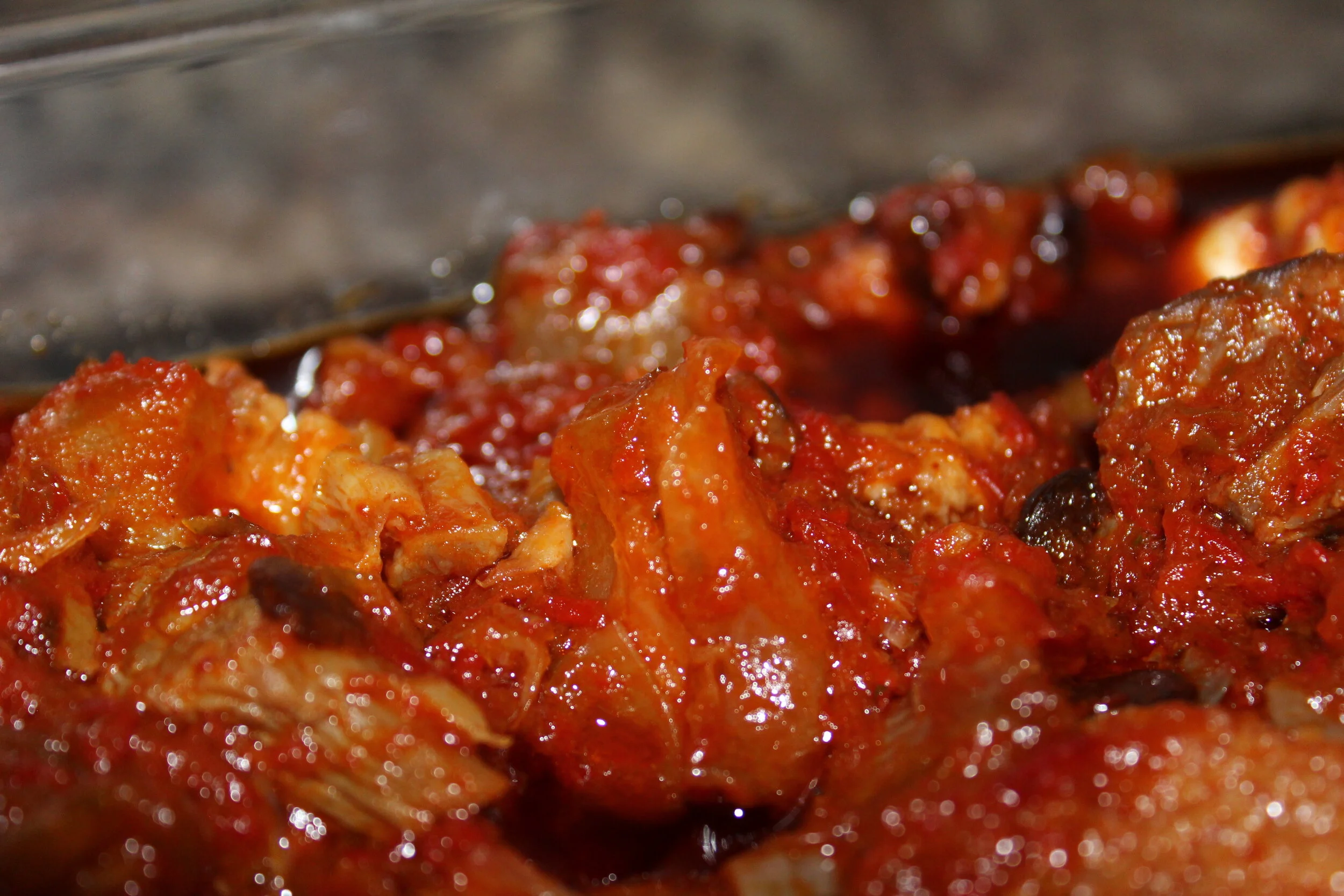
Close shot of Ayamase